April 7, 2026
How can we improve the services we build? And, how might users themselves have a seat at the table?
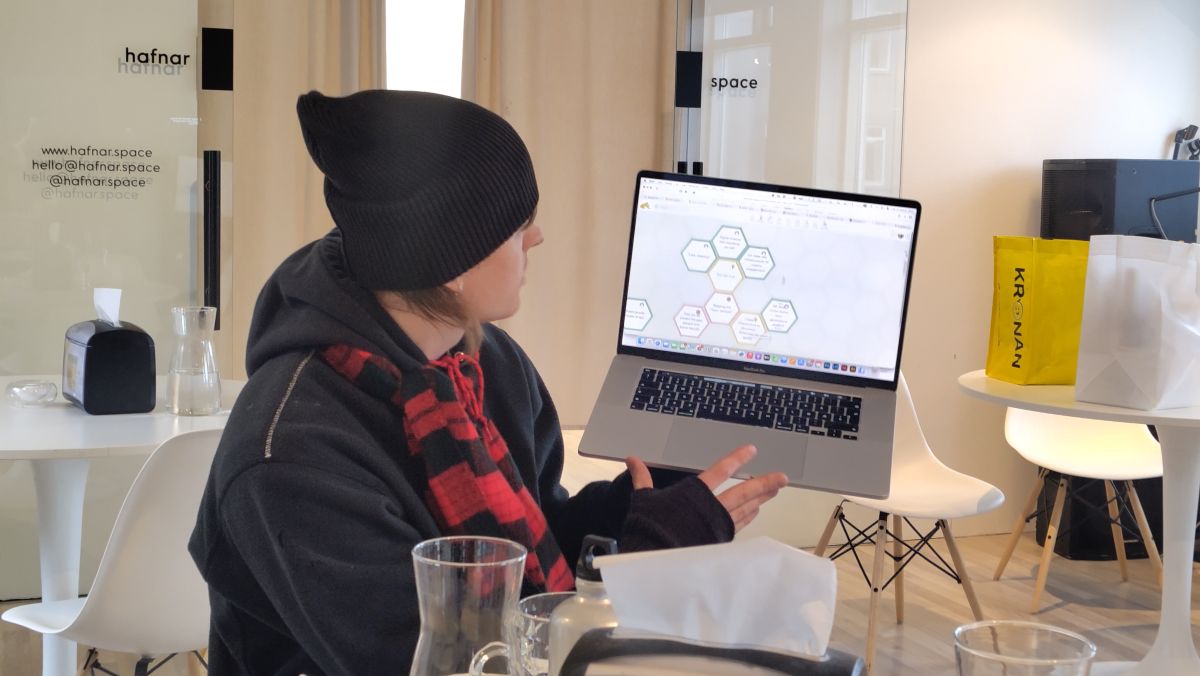
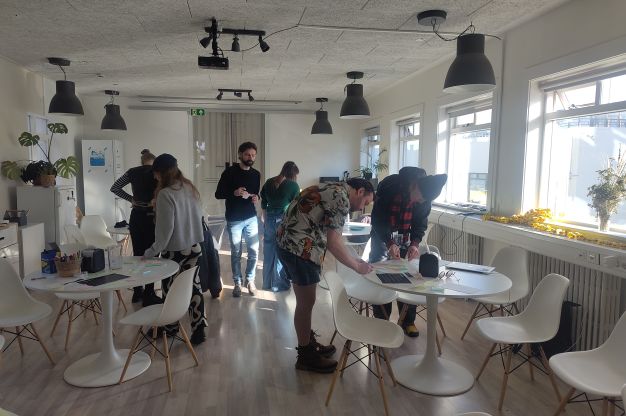
On March 14, the long-awaited Hausckathon took place at Hafnar.haus: a one-day collaborative sprint dedicated to rethinking how the hafnarhaus.app can better serve its community. Organized by Hafnar.haus’ Digital Commons Höbb together with East of Moon, the event brought a dozen participants into a shared space of open-ended experimentation. No strict rules, no material constraints, just a common question: how might this platform truly support its users?
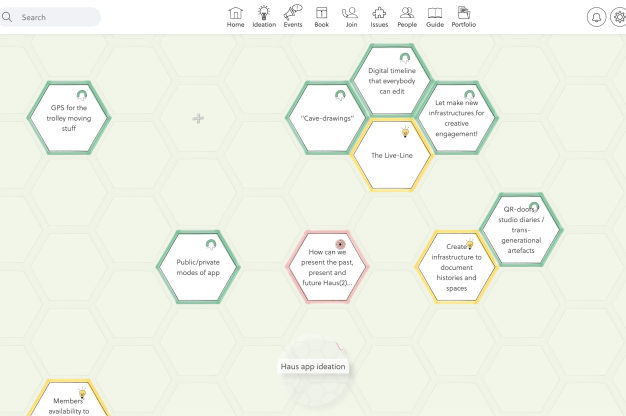
The hackathon didn’t begin on the day itself. In the weeks leading up to it, members of the hafnarhaus.app community were invited into a Polis discussion, a deliberation interface where participants could vote on and submit new proposals in response to the central question: How might the hafnarhaus.app support the community? As contributions accumulated, patterns began to emerge. Through member-based input rather than top-down framing, four thematic clusters took shape, forming the backbone of the hackathon.
- The first cluster focused on communication: how the platform might better facilitate encounters between members and non-members, enabling cross-pollination between practices that might otherwise remain isolated.
- The second addressed usability and workflow, examining how the app can support the complex, everyday interactions between users and services more intuitively
- The third cluster dealt with security and infrastructure, raising questions about how to balance openness with trust – how to create a system that is both accessible and dignifying.
- The fourth cluster gathered more experimental proposals, from storytelling features connecting Hafnarhaus and Hlemmurhaus, to tutorials and speculative infrastructures designed to make space for the unfamiliar.
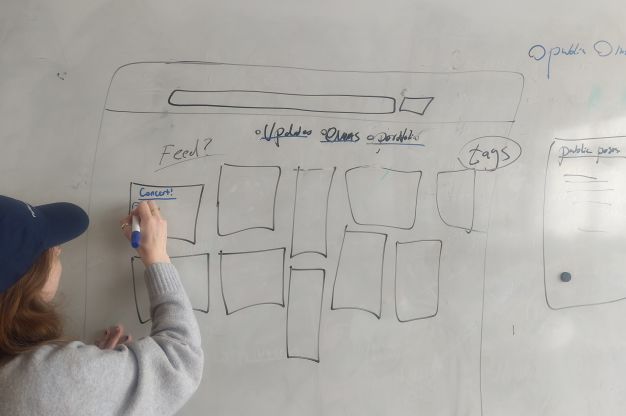
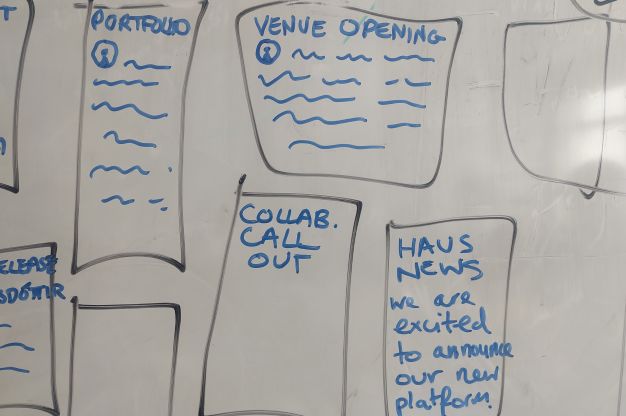
On the day, participants revisited and expanded these clusters, then split into three teams to research, prototype, and speculate. The atmosphere oscillated between focused collaboration and something closer to playful espionage, with brief, curious visits between groups. By the afternoon, concepts were presented and pitched. The proposals ranged from rethinking the app’s homepage and clarifying the balance between public and private features, to a GPS tracker for Hafnarhaus’ perpetually misplaced trolley – an idea that may or may not solve anything, but certainly reinforced its myth.
So what comes next?
The outputs of the hackathon are not endpoints, but material, produced, gathered and ready to continue within the ideation space of the app, as well as between members. While final decisions on design and implementation remain with East of Moon as the maintainers of Missions.dev, the process itself reflects a different model of building: one where direction is shaped together, and where the community actively participates in articulating its own needs.