Three quotes on "Hafnar.haus and beyond"
Episode 3 in this mini-series.
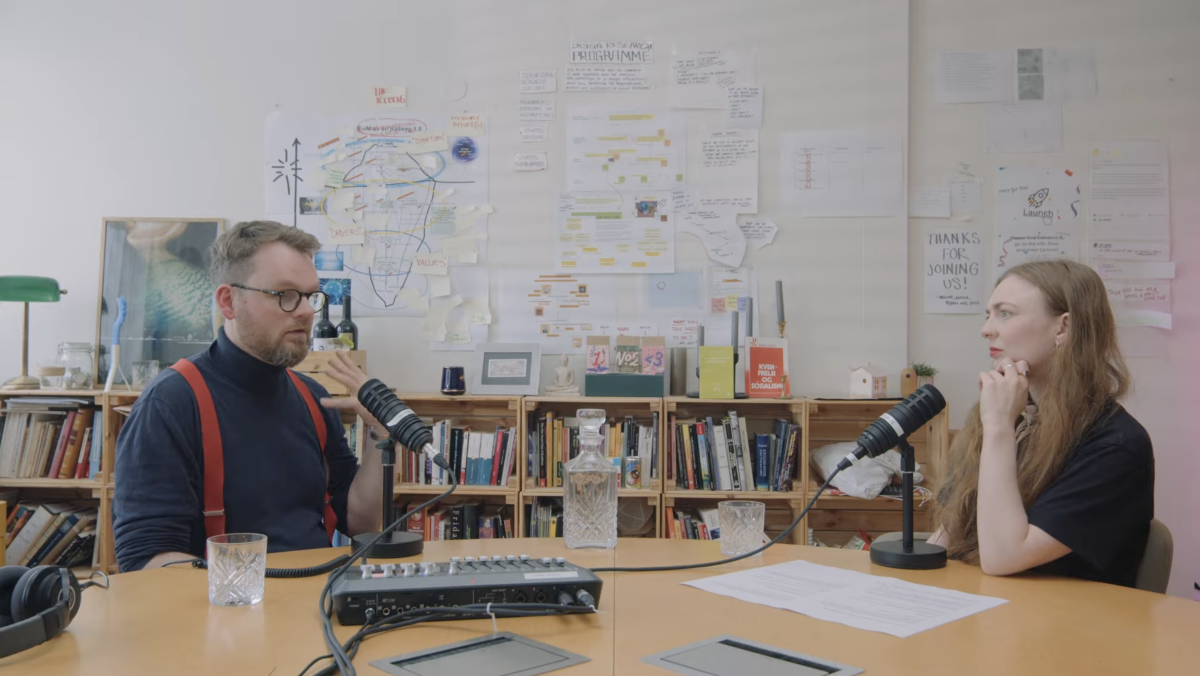
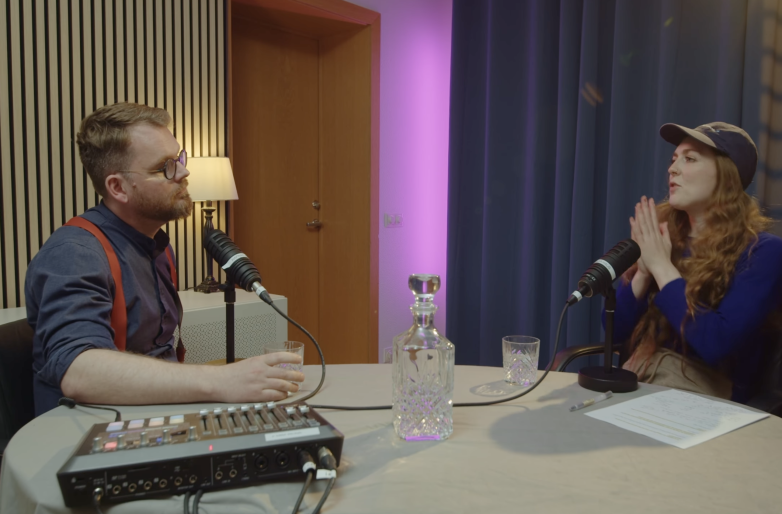
Josie and Arnar's podcast mini-series "Three quotes on". In this episode they talk about Hafnar.haus, a creative community in down-town Reykjavík. Will books be written about it in 50 years time, or just footnotes?
You can watch the podcast on Youtube (below) or by looking up "East of Moon Transmissions" wherever you get your podcasts, such as Spotify or Apple.
This episode was recorded in East of Moon's home, hafnar.haus and filmed by Patrik Ontkovic.
Summary
- How Hafnar.haus came about: an underused city-owned building, a city policy of releasing unused space for the creative setor, and a pair of hosts betting on an emergent rather than planned creative space.
- Is it just about affordable space, or does putting 400 creatives under one roof create something they couldn't create scattered around the city?
- What does a host of a creative community actually do, and why is there a learnable "art and science" to it rather than things simply happening by themselves?
- How small deliberate devices (like handing new tenants a lock cylinder and a screwdriver instead of doing it for them) instil shared ownership and a "we're in it together" culture.
- Brian Eno's "scenius": if new ideas are generated by communities rather than lone geniuses, how should that change who we select, value and credit?
- The clash between co-created art and a commercial system that needs a single copyrightable name — and whether initiatives like the "Made in Hafnar.haus" label can make collaboration the brand.
- Could the Hafnar.haus way of organising (permission to experiment, open outcomes) be applied to schools, kindergartens, hospitals or other sectors of society?
- Where is the right balance between openness and structure, given that institutions default to control — illustrated by the kindergarten aquarium and the children's pirate-ship gallery?
- Who should get the 40,000 m² of empty state property: artists, Hafnar.haus itself, or creative-minded people across all sectors?
- How can a community capture and reinvest the value it creates, when those closest to individual success are least incentivised to contribute — and is Hafnar.haus a community, a scene, or something aspiring to be written about in fifty years?
Transcript
Transcripts are auto-generated and may contain errors.
Josie Anne: Hello and welcome back to Three Quotes On. It's a podcast from East of Moon, and my name is Josie Anne Gaitens, and I'm joined by my colleague Arnar.
Arnar: Hello.
Josie Anne: This week we have three quotes on Hafnar.haus and beyond. If you're listening at home and you don't know what Hafnarhús is, don't worry. We're going to explain all about this amazing, interesting creative space and give you some context for why we think it's an important. Way of looking at creative communities in general. We're going to jump straight in with a quote from the former mayor of Reykjavik, Dagur B. Eggertsson. And this also illustrates why he thinks it's very important. So. He said. In Hafnarhús, some 300 individuals have facilities for artistic creation and a diverse multitude of projects, which makes the house a living melting pot and one of the biggest and most sought after workplaces of the country, even though each one is independent and works on their own. The waiting list was around 500 people last time I knew, so let's contextualize this for folk who have no concept of what Hafnarhús is. Arnar, you've been here since the beginning. First kind of facilitating the development of the house as a host, and now as part of East of Moon, experimenting with different ways of building creative communities with Hafnarhús as our kind of like test subject. How did it first come about? Who were you working with, and what was the idea behind creating the spac e?
Arnar: From my perspective. It started with an email from René, who was to become my co-host in Hafnarhús. He talked about the need for space, that different creative sectors could come together and there would be sparking of interdisciplinary innovation and creativity and sort of. When I met with him, we connected around this idea of like an emergent organic space versus a more planned one. Það fannst ég að hún var eitthvað mjög áherslu person, að verða með kreatíf áherslu og kreatíf mjögmjögum. Það var mjög áherslu að verða með hún á þessu. Það fannst hún að verði með einn grúp um Halli, af UNO, að það eftir því að það er áherslu með aktífísum og filantropi, að því að það er áherslu og mjög mjög mér. So he was working with a group around him of sort of well known names and faces in the creative sectors of Iceland. And they were looking for a space. And during the tenure of Dagur B. that you just quoted, a decision was made to. Make this space that is part of the same building as the art museum, is the Reykjavik Art Museum, to make it available for creative sector workers and individuals, and as part of a bigger policy of the city of Reykjavik, to make unused spaces available for creative use. And in this op-ed that you've just quoted now, Dagur is a member of Parliament, so he's working the sphere of the state and not just the city. And he had just asked in a parliamentary inquiry, how much unused space is there really that the state owns? And the answer is 40,000 square meters of space that the state owns and isn't being used for anything. Some of it is moulded and in dire conditions, but some of it is perfectly usable, but it's just standing empty. So for this empty space, Hafnarhús was created. You mentioned it at some point, that it's, for someone who hasn't been here, it's not quite a top-down, planned, chic space, but it's not quite a squat either. But the feel is perhaps somewhere in between.
Josie Anne: Yeah, I think, you know, again, to just add that context. So we're essentially, we're talking about over this quite large building, we've got a mixture of individual offices and co-working facilities and that's used by filmmakers, designers, we have people who are making games, we've got journalists, researchers, so anything kind of relating to the creative industries. And as is mentioned in this quote, you know, it, it is. What does he say? It's a melting pot and the biggest and most sought-after workplace in the country, even though each one is independent and works on their own. So, yeah, these are, these are individuals or individual entities, you know. But there is this sense of a kind of creative community.
Arnar: Yeah. The question for a project like this is, is it just about making space available in an affordable way? And you could ask yourself a hypothetical question like, would it serve the city of Reykjavik as much if all of these people who are here, who now number 400 in both the buildings, if they would just be scattered around the city in smaller spaces, would it create the same effect?
Josie Anne: Right.
Arnar: So if it's just about affordable space, then that would be all that was needed. But there is some sort of an opportunity here of getting everybody together or all of these people together and thinking about, like, what is the added value of 400, you know?
Josie Anne: Yeah, definitely. And I think it's also significant, like you were saying too. To illustrate it to people who haven't been here. You were mentioning the fact that it was kind of in this in-between state when you guys first moved into this building. It's changed a lot. And we've been here. Is this the fourth?
Arnar: Three and a half years.
Josie Anne: Three and a half years, yeah. Yeah. So it had been sitting unused for a while, this space, and it had also had various different functions before. So you're moving in. And we were sitting right now in the East of Moon office, which is within Hapner House. So if you're watching this in video, you can see it said we have walls, and, like, you know, it's, like, functional. We're
Arnar: warm.
Josie Anne: We're warm.
Arnar: Electricity is working
Josie Anne: sometimes, but. You know, there was a little bit of a kind of pioneer almost attitude when you first came into the building as well. And how important was it to have that kind of like, unfinished space or a space that felt like it was open to opportunity to change and adapt and be able to be made into something that was useful to people, rather than something that was, like, pre-formed and thought of and sleek and finished.
Arnar: Yeah. Every time I've been involved in creating a certain space, people have been very well-meaningly trying to explain to me what it has to look like before people can use it. So, you know, this has to look artsy. It didn't look artsy at all. It looked like abandoned office buildings. You have to make it cool before the cool people can come in. And needless to say, we went into a different direction and this project became about inviting individuals and groups and constellations of people coming together to kind of co-create this and come up with their own stuff and put their energies and passions into this. A playground or a sandbox for what might be possible. And out of this emerged daily communal lunches or podcasts or art galleries, zines, you know, all kinds of things that kind of people found an energy to make together. Obviously, there are sort of boundaries and limits that we have to figure out. And so we have this task, which is a delicate one, of like, keeping it together, sending out the invoices, making sure that we are not bothering the neighbors or creating any sort of pushing out of the boundaries that we have that would jeopardize our existence here. But within those boundaries, keep it as open and inviting and playful as possible. And I'm sure the feeling was a little bit different in the beginning, and it's settled now, and there's ways of doing things. Over time, things do institutionalize. But I think that the feeling that people experience when they step in here and come for tours is this feeling of a space that the users are very much part of creating themselves. And I've had people come from the city or from different public institutions and organizations. And have a tour here. And some of them are like, okay, that's great. We're very happy that the creative industries are having this space. And I have also had other people who were like, I wish I was working in a place like this. Couldn't my environment be a bit like this? And we even had occasions where employees of city-adjacent organizations and institutions tried to talk their boss into, you know, buying them a co-working subscription here. And the conversation, I think, sometimes
Arnar: illustrated the different understandings of the value of a space, where they would say, you know, you have your cubicle or you have your office space or your, you know, open space. You know, why do you need another one? And that is kind of the core of the question. Why do you need a space? What is the space serving beyond, you know, a desk and electricity and a place to plug your laptop into?
Josie Anne: I want to pick up on something that you were talking about as well in terms of the role of being the host. And, you know, you were sending the invoices and you're keeping the lights on and so on. But you're also, you're doing a little bit more. You're inviting people into the space, you're taking an active role in kind of, it's co-creation like you say, but you're a part of the structure that invites people to co-create. What do you think the benefit is of having things set up like that, where you take this position of a kind of, not quite a curator, but you're actively engaging with this community versus someone who is just, you know, handing out keys to offices and facilitating a kind of landlord or janitor role? Why do we need people like you and Renee and then the other people who've gotten involved since to be active participants in the building of the community?
Arnar: Well, because, the way to explain this is, sometime a few weeks into this project starting, and in a typical Icelandic fashion, not with a lot of preparation, me and Renee were sitting in the night down in the Wasabi room, talking about, like, what would be our measure of success? At that point, we had promised each other to do this for six months. And, you know, when is this successful? Like, what is the marker of success after six months? And the two things we came up with was if people start creating things in here that we could never have imagined, that should be one marker of success. And the other one was that if people are meeting and starting to work together that would not otherwise have met. And so if you. Design something with a closed objective in the beginning, you're not allowing for serendipity to happen. You're not allowing for surprise. You're not allowing for the community that is there and then to emerge into a certain direction and there's times and places to plan things and to know exactly where you want to end up in. But that is not a creative community. That is a different thing. So we wanted to make something that was creative and that was. Yeah, creating something that we couldn't have imagined.
Josie Anne: Crucially, you were planning something. You weren't leaving this to its own devices either.
Arnar: No. And now that I was part of making Hapten House and the Blue Bank and some other places, I have been called in as a consultant and an expert. To advise on others that are making initiatives similar to this around the world. And I'm tasked with, okay, in the beginning when I would go and do tours, I would try to minimize the role that we as hosts have. And I think that is kind of the communistic way where we want to highlight that things are self-emerging and, like, things happen on their own and people just came together and solved it. And you don't want to put yourself in the foreground as the creator, because that is not the point. The point is not to share on Instagram amazing photos of something that you designed that came out of your hat to illustrate what an amazing visionary you are. The point is to enable the community to go into certain directions. But what I understood is that. Sometimes if I minimize the role of the host, of the person that is kind of curating this or keeping this together or organizing this, I'm not really helping the next person that comes along. And if people hear that, oh, it just happened by itself, you can just have a box, a concrete box, and then creative people will come and things will start brewing. They are getting the wrong lesson. And somebody who might be tasked with organizing such a space, might find themselves frustrated or the expectations from what should happen from them are maybe too high. And so I have started to really underline that there is an art and science to developing creative spaces. And it doesn't come from anything and it comes from certain experience. It comes from learnings and attitudes and ways of doing things that can be learned. And, you know, you can email hello@stofmoon.com if you want to. Want us to. It's only 20, 000 per hour, but okay, I'm faced with a paradox because yes, it can be learned and it is a skill and there are methods to it, but at the same time, it has to also be kind of emergent. The way I can explain this is you mentioned the role of a janitor, of handing out keys, for instance, and something as a small example of devices that we used. Is we had 90 empty offices here in the beginning, and we had hundreds of people moving into it. And we very intentionally, you know, the keys had to be changed and the cylinder had to be put in. And we decided
Arnar: when you come here and you take over your office, we are not going to put the cylinder in. We are going to hand you a cylinder and a screwdriver. You have to change this.
Josie Anne: This is before my time. I didn't know that.
Arnar: Yeah, but that was a very intentional device. To instil in people the understanding that we are doing this together. You have to take care of your own space. This is not some place where, you know, there is some sort of mothering going on. And so everybody went through that experience of being handed a cylinder. And, you know, we were waiting for you to try your best, and some people couldn't cope with that, and that was okay, and then we would help them.
Josie Anne: This wasn't like a test. Like, if you can't put the lock in your own door, then, sorry, this isn't really the space for you.
Arnar: It was more like, if you can't even try, then it's not a space for you.
Josie Anne: Did you tell people that, or was it just kind of the writing was on the wall for everybody?
Arnar: We told people that through those kind of approaches to things. So, I mean, it wasn't necessarily. It might have been. In this case, it might have been. Saving us some hours of work to not do it all of ourselves. But that wasn't the main motivation. The main motivation was instilling this into people. And there were other things that we did that were intentionally intended to curate and inspire a certain type of attitude within the community. And this is coming from also the understanding that a community isn't the sum of the individuals, but it's in the way that they relate to each other. And if the individuals relate to us as the hosts, as their janitors, or the people working at the lobby of a three-star or four-star hotel.
Josie Anne: Three-star, let's be real.
Arnar: Okay. No, but like, especially if they relate to us as a five-star hotel lobby, this isn't going to work. And it's not just because we were saving ourselves work that has to be. I mean, we didn't have a lot of money to run this, of course, but it's important that this wasn't a cost-cutting exercise. If people can't do things on their own, then everything they do requires us to be involved in it. And then that has to go into the equation of how much time do we have. So, then it starts being about permissions and about what can we do. So, like, if every time you want to have an event, and if you need somebody to come and set up the projector and the speakers and stack the chairs and mop the floors, if that becomes an issue, then the barrier to having an event becomes that much higher. So the point is that it's a place where people take care of themselves and create things together, and that enables them to take ownership of it.
Josie Anne: And I think, crucially, it's not that then you need to be able to be able to run an event here, that you need to be able to set up a projector yourself or, you know, whatever other technical or various skills that you might need to run an event, but that the people who get asked to take part in organizing events here, they know who else in the community to ask for help. So you don't have to be able to do everything solo. But you have to rely on your fellow community members to be able to get that stuff done, because there isn't someone who will just do all of it for you. You don't send in, like, a tech rider, and they're like, hey, please provide me with three microphones. You need to go and, you know, knock on Patrick's door and say, can you come with me and look in this big box of cables? Yeah,
Arnar: mostly it's Patrick's.
Josie Anne: Yeah, it's mostly Patrick. Yeah. He also set up the cameras for this. Thank you very much, Patrick.
Arnar: Yeah, that is the thing. And that creates a certain kind of an atmosphere , an atmosphere of like we are in it together. We do need to help each other out. It's not like I paid for this and I require service. And that I think is more, in many ways, more fulfilling way of existing within your community. And we have talked about this in previous podcasts. But of course, this is very parallel to the idea of a village, of a... literal village of a place where people live alone and far away from services and, you know, infrastructure, and they just have to take care of each other. They may or may not like each other, but they're in it together. And that's the, I think that's the kind of vibe of Hafnarhús. I hope within a city,
Josie Anne: we do like each other, mostly for the most part. Okay, no comment there. Let's move on to our second quote, because I want to talk about this kind of community and a sort of broader meaning. This quote is from Brian Eno. Here we go. I think that although great new ideas are usually articulated by individuals, they are nearly always generated by communities. What I see as the waste is the waste that we make of this possibility of cooperative intelligence.
Brian Eno: Being an artist, you hear a lot of talk about genius. which is the process of singling out certain people in art history and saying those were the important ones. You know, Picasso, Rembrandt, Shostakovich, whatever. Whenever you look at any of those artists, you find that they lived and drew from a very, very active, flourishing cultural scene. And they were only one of the elements in that scene. All these people who are called genius actually sat in the middle of something that I call scenius, S C E N I U S. So genius, just as genius is the creative intelligence of an individual. Scenius is the creative intelligence of a community. And what I want to see is more attention given to that possibility of creative behavior. So what that means, of course, is two things. One of them is the understanding that all people are born unequal, so everybody has a particular and unique set of gifts and talents.
Josie Anne: And secondly, that intelligence is generated by communities.
Arnar: Yeah. It goes to that question that I posed, which is like, what is it that we are making here? Would it be the same if people would be scattered all over the city? And the way an individualized understanding of history would like us to understand creativity or progress in art or even innovation or science or whatever? Is through the individuals, like Brian Eno is saying. And almost like they pop up in a vacuum. The Einsteins or the Picassos and so forth. And, yeah, if that were the case, we could scatter everybody around and there wouldn't be this kind of sum of the total whole. And it has very important consequences to how you run a space like this. From bigger ways that you approach the community to very practical things like, you know, if there's too many people who want to come here, you know, how do you select for that? There could be a kind of line of thought that would say, you know, we should get the best artists or the most viable ones. So the one that, you know, the city of Reykjavik or Iceland, or culture in general requires to support. And if you look at them in this atomic way of, like, who is a prominent or important artist, you're not looking at it in a holistic way like Brian Eno is doing. And you're not looking at, like, that last quote about, like, everybody's different and have different things to contribute. I think that you understand in a community that the community is the, in some way, at least if we believe him, it's the, the community is the producer of the new thing, of the new knowledge. It's interpreted and kind of classified by individuals, but it comes out of a scene or a community. And then somebody who might not be the one that makes it as an artist in the history books or on the charts or at the export offices or something like that, they might still have contributed enormously to that development of that particular scene in their own way. Maybe they are the annoying person that is always kind of coming out with far-out things, like going into extreme lengths of exploring new stuff that is maybe irrelevant, but sparked an idea in somebody. Or maybe it's the one that organizes a screening or a session together with people. Or maybe it's the one that made people feel comfortable or safe.
Arnar: And make them feel like they could express themselves. So if we think about the artistic production being more a product of a system that is the community. Then we think about everybody's individual roles to that in a very different way. And I think that's a much more sophisticated way of thinking about how we create new things than that of the individualized atomic way.
Josie Anne: Have you found this idea? Difficult to sell to people? I mean, I wonder when, you know, we are experiencing this very individualized perspective on success, and we can talk about what drives that, but generally there's a sort of like, you have made it or you've not. And are you essentially saying to a lot of people, or are people hearing you when you talk about this as saying, like, well, you guys have kind of failed, but you can still make something nice so that someone else can succeed?
Arnar: Yeah, well, if the framing is someone else succeeded, then obviously that is a bit of a grim outlook. But that is, of course, maybe this is a utopian thing, but that is, of course, why we have to think about progress in our field as, like, a collective effort. You can be a mediocre writer, but if you are part of the people who always show up for, like, events and things, and you buy new books that come out and you're part of that scene that pushes things forward, you are part of making the new stuff. And so you, of course, have to think about it like that. You have to think about it as our community has made something. It's definitely it. It clashes with the commercial framework, obviously,
Josie Anne: right?
Arnar: So it clashes with, like, the way to sell art generally is through individual copyright. So they push. The label that they push is the name of the artist. So that becomes commodified in some way. So obviously, you know, for a capitalist entity that is trying to sell art, whichever art it is, music or visual art or filmmaking or anything like that, they can't sell the product of a scene, of a community. They have to have to tack that onto a specific name that they can make a contract with and that becomes a brand. And so I think that is the main thing. Like, there's the main clash that happens.
Josie Anne: There's been lots of different initiatives to rethink these kinds of structures and systems in art and art house. But one, one that I really liked was. I don't even know who kind of initiated this idea,
Arnar: which is quite common, by the way.
Josie Anne: Absolutely
Arnar: no one knew where the idea came from.
Josie Anne: And in a very positive way. There is this Made in Hafnarhús.
Arnar: Oh, that was me.
Josie Anne: Oh.
Arnar: No, I'm just kidding. Was it? I don't even remember lots of people. Yeah.
Josie Anne: Well, I mean, there's also even the ideas here. Okay. Even if you do know the person who first had the idea, there's a lot of piling in on people's ideas, and we should talk a little bit about the app at some point and how that facilitates that, too, but. Yeah. Someone will have an idea, and someone else is like, yeah, that's great. I want to help. And there's not really a kind of like, oh, no. But this is kind of mine. The whole idea is often that you want to take this to people and get people's backing and get them involved. So there was this idea, possibly Arnar's, that to have this Made in Hafnarhús label or logo. I know that. I think it was Liam designed it. Did Liam design it?
Arnar: I think maybe Fernanda designed it, but Liam drew it.
Josie Anne: Okay.
Arnar: That makes sense.
Josie Anne: So then you see, you've already got like multiple people just in that, you know, initial description. And this was something that could be used on products, projects, whatever, that involved two or more members of the house. And, you know, it kind of made the collaboration, made the co-creation the brand.
Arnar: Yeah,
Josie Anne: so to speak.
Arnar: Yeah. Precisely. And obviously. You know, whatever framing we have of it, it is still true that everything worth its worth anything is a co-creatio n. You know, you're always working on the back of some sort of a previous artistic output. You're always working in a context. The audience and the consumers of it are always feeding something back to you. There's the infrastructure, there's the galleries, there's the schools, there's always like, it's always socially created. And so, you know, when I was studying literature, we would learn about the death of the author and the death of this idea that a piece of art was sprung out of some genius's mind, fully formed and completed. But actually, the meaning of the artwork is something that society sort of invents together. So, like, what is Shakespeare? I mean, he was a guy, he lived. He was probably pretty clever at writing plays, plays specifically for those who don't know. But the way he got repurposed was part of the history of the United Kingdom and England and Romanticism. And so we are always kind of creating things together. And that is true of art and society at large. So we do need to atomize it and individualize it and make it part of something that you can copyright in order to commodify it. But that's the purpose of commodities and not necessarily the reality on the ground. So whether it's Britney Spears or whether it's the Made in Hampton House logo, the difference is not in whether it's co-created or not, it's whether it's presenting itself as being co-created. And if you walk into this place, it presents itself as co-created. You know, it tells you that as the kind of norm. I think. I think that is kind of the feeling that people, when they come on tours and they get all inspired, I think that is the feeling they get from this place.
Josie Anne: Definitely. I mean, I think it is a kind of an exciting space to be in, and I want to kind of reflect on what that means three and a half years after it initially started. But to get there, I'm going to take us to our final quote. Final quote comes from Mariana Mazzucato, but it starts with her quoting and. I'm not going to do a great job of this name, having only seen it written down and never pronounced. Antoine de Saint- Exupéry.
Arnar: Perfect.
Josie Anne: Do you think so?
Arnar: Yeah.
Josie Anne: Okay, so it starts with a quote from himself. If you want to build a ship, don't drum up the men to gather wood. Instead, teach them to yearn for the vast and endless sea. And Mariana Mazzucato goes on to say, governments must reposition arts and culture as strategic drivers for more inclusive and sustainable economies. This means recognizing their role not only in generating GDP or jobs, but in imagining the goals and missions we choose to pursue. It also demands integrating arts and culture into outcomes-oriented policy design and devising new ways of valuing them as critical to the shaping of our economies and society. It's a really nice quote in that it, like, if you've listened to the first two episodes of this podcast. The first one we talk about the value of art and creative industries and how. you know, the economic value is not perhaps a great measure. And then in the last episode, we talked about the role of kind of artists in thinking about our future and moving us to different places in society and. So it's quite a grand quote to have selected. In what way do you see the role of Hooton House, or communities like the one we've built here in fulfilling that kind of creative expectation that Mariana Mazzucato is talking about here?
Arnar: Yeah, this I don't know. And Hooton House, of course. is providing space for artists and community, for different people. And to some extent it's a platform for these kind of scenes to emerge, like Brian Eno was talking about. And I think it's impossible to deny that that has been achieved to some extent. I'm sure that people can have different opinions as to how successful it is, but this is what we have here, and obviously I'm not content with that. And that's also why I. I stopped being like a formal host in Hobbton House and wanted to kind of focus on different things of further horizons. And I can't escape but thinking, like, how far can this go and what can be this role, the role of this in society at large? And for some reason, there's a few events that we've been asked to be involved in at East of Moon that are about. Innovation and creativity or innovation and art. And I'm trying to figure out what is the thing that we want to say in that space and what we want to contribute. And on some level, you know, I don't have this organized in my head, but there's a few points. The first of it is we should, as an artistic community and as a creative community, understand that our relationship with society is. Something that we have to take seriously. The fact that we can make art or have spaces like this or music schools, or even that we can live off our art and not get screwed over by techno-futuristic endeavors like artificial intelligence, all of this is inherently kind of a political struggle. So in some way, I think we need to go much deeper than some organizations of artists are doing, where they're kind of pointing out that if you fund us, then the more tourists will come.
Josie Anne: Right.
Arnar: You know, I think we need to claim a much grander role in society than that. And if you marry this conundrum of the artists of like, who are we? And what is the point of us here with that thing that we were talking about in the last episode as well, of. We don't have these grand visions of society that unites us and that's being left to Elon Musk and OpenAI to figure out for us. Then I think we are landing on what Mazzucato was talking about, which is that ability of art to define what is valuable and important to us and to make like a collective experience of dreaming. I added that it's more of a surrealist thing. So I have this rebellious question in my mind as a participant in this Hebden House project. Now, not formally, but now very much part of the community, with this kind of brigade of East of the Moon operating within it as like the armed wing of the Hebden House community.
Josie Anne: I really like that. I think we could be a brigade.
Arnar: Yeah, exactly. So, you know, what could this become? What could this be? 400 people all in the same place. You know, it reminds me of how. The modern workers' movement was born out of people coming from the countryside and all being united in one factory. And then you could see each other and you could understand each other's challenges and problems. And I think the exciting thing is to think about a few things. Like what could an artistic community like Hebden House become in the whole society, in the global perspective? You know, what influence can it have on the future of Iceland and humanity and so forth? And secondly, this way of organizing or working together, of being serendipitous and experimental and open and co-creative, are there opportunities to apply the Hafnarhús model to other sectors of society? So, I guess what I'm interested in is exploding a bit the box that we have been put into. And as interesting as it is and satisfying when somebody, let's say from City Hall, looks at this and says, hey, what a wonderful thing that we've got all the cute artists in there and they're kind of doing their thing.
Josie Anne: Yeah.
Arnar: I want to turn around and say, like, this is the way you should be organizing kindergartens and school meals and the public transportation system to some extent. You know, learn from this. Like, you know, if you feel, when you do a tour, if you feel like, oh, it would be wonderful to work in a space like this, this doesn't have to be reduced to artists or creators. This could be how society at large works. And I told you earlier, yesterday, I was working with a team at the University of Iceland of students that are learning about social innovation, and they wanted to come up with a new innovation for the classroom. And I was challenging them to think about, like, how do you get permission to implement a new gadget or device into a classroom of an elementary school? Because it's difficult. It's not. A lot of spaces in society are not like Hafnarhús, where you have permission to kind of just try something out. Where the people running the place, their main objective is not for everything to arrive at a place that they have predetermined, but actually the main objective is for everything to arrive at a place that they haven't thought of themselves. And this, one of the participants in this group started talking about working at a kindergarten and wanting to put up an aquarium and this kind of. crushing experience of trying to get permission to put up an aquarium and waiting for four or five months until somebody says no, that she doesn't even know who it was. And if that is your experience of everyday life of the workplace, you're not going to feel very inspired to come up with new things. And so, yeah, I am going to unapologetically allow myself to dream and to ask big questions, one of which is, you know, how can Hafnarhús change the... or the community here change the course of the history of Reykjavik. And what can the rest of society learn from the way things emerge in creative communities?
Josie Anne: I think those are the questions that we need to be asking. It's what we need to be thinking about. And I want to kind of ask you some questions back to just sort of test perhaps some of the parameters of those ideas. I mean, the first thing that jumps to mind is, we mentioned at the top, this quote from the former mayor, from Dagur, was in response to him finding out through a request in Parliament how much space the country owned that was unused. There's kind of two ways I can see the role of Hafnarhús in that kind of context. The first, I guess the question is, should all of those spaces that he has identified, not the ones that are unusable because of mould, but all of the ones that are usable, should all of them be given to artists? And I want to follow up that question by, should all of them be given to Hafnarhús? Because Hafnarhús, we're named Hafnarhús because we are in... It's a kind of slightly tongue-in-cheek name. That we're in the Hafnarhús building, Harbour House building. But now we've been given, now we've taken over another property at Lækjargata. So we also have Lækjargata House. Should there be a version, a house in some remote place in the countryside? Should every empty building be part of the House collective? Or do we risk, as you were mentioning before, almost institutionalizing ourselves by expanding in that way? How do you see that conundrum of, like, wow, this has been amazing. We should make it bigger and keep it going? And also, it should be not something that people come to just treat like just any other kind of solidified institution.
Arnar: No, it shouldn't be put at the helm of this organization, House. And it shouldn't even be put into the hands of artists and creators. But it should be put into the hands of creatives in all sectors of society that are working as if they were a creative community like House. And if we think about why are there 40, 000 square metres of empty buildings by the state? I am going to admit I haven't looked at each one of them and made the survey, but I'm going to make a guess for why they are empty. Why does a big piece of property stay empty? One of them is because it's mouldy and not being kept well. And that's a particular story of mismanagement. And another one, which I think is more common, is that they are big properties. They need big institutions, and these big institutions don't know how to make a space their own. In this sort of way that we could. So, first of all, there has to be an enormous amount of politics before you decide which institution goes into which space. And that's not a creative, nice, positive politics, but it's just kind of like territorial institutions fighting for who gets what. I suspect that takes quite a lot of time. Second of all is, they cannot just come in and allow their employees. To give them a key and say, you know, find the space and make it your own. And then here's some empty things under the stairs. Why don't somebody make something nice in there? That's just not the way they run. They would have to have interior architects and designers figure out, you know, how can we make this building work for the police commissioner? Or how can we make this building work for this or that thing? They could never come overnight and within weeks have it. Occupied by loads of people who are already being productive and making it their own. They couldn't work like that because it's not in their culture, but it should. So I think that these spaces should be taken over by people like the young woman yesterday who wanted to experiment with thing s, a group of young people, immigrants, different sections of society, that these should be sandboxes for that.
Arnar: But of course, that's where we're thinking, therein comes the question of. Yeah, how you organize as a society. And so I think that would be much more interesting than to have another version of Hapten House in Kobor or something. And that would be the truly transformative thing. It's like, what if this was a place for nurses or something like that, where it could be. You know, collective could be like collective dreaming and interaction and co-creation going on.
Josie Anne: You were mentioning this young woman who was working in a kindergarten. And I'm thinking about it also in terms of like, it kind of just jumped into my mind, like the educational system in general, like imagining if there was a school that was set up like Hapten House an d, you know, where. The students there were engaging with their physical space in the way in which the creative community is given permission to here. And for someone like me, who found the kind of restraints of school mostly just very confusing. Like, you know, in my school, I had a huge problem where we weren't allowed to wear hats inside. And I just couldn't get an answer, ever from someone about why not. And it was just because it's the rules and you're a student and you're meant to follow the rules. So, you know, if I could be in a space like this and have gone to school there, I think I would have had a completely different experience of the educational system and felt like a, you know, a co-collaborator in my own learning. That that would have been very positive for me. But whether it's schools or whether it's, you know, nurses or a bank or whatever, there are always individuals like you talked about at the beginning, those who you kind of handed this cylinder for the lock to, who were just straight away like, ah, this vibe is not for me. How, you know, what's I want this dream that you're dreaming. To go all the way. And I'm with you on it, but I'm also aware of the fact that, like, there is a certain amount of chaos that is inherent in organizing like this.
Arnar: What are you insinuating?
Josie Anne: I, you know, you know exactly what I'm insinuating, and I'm positive about it for the most part. But I, I wonder how we strike that balance. I've heard about schools, for instance, that private schools that allow. students to choose to focus on the areas that they are particularly interested in, or so on. And there's lots of positive things to say about how those individuals experience life and feel confident in themselves and don't seem to suffer some of the same issues that young people at typical institutions do. But there's also the critique that okay, but then maybe they're really. crap at spelling at 20 years old. When they, when they come out of school,
Arnar: it's okay because they'll have the community to take care of them. That person next door that knows spelling will help them.
Josie Anne: I mean. Valid point, but you know what I'm getting at here. Like, there's balances. You recognized it yourself. Between, like. You know, making everything possible to people and creating some kind of boundaries and structures. Right now we're in this box. We've kind of come to, like, three and a half years of Hapnerhuis, and it is becoming a bit of an institution. I think there's risks there also in terms of the fact that, like, that comes down to there being these key individuals, like we've mentioned before, who are involved in the same things over and over. There's a risk that they burn out. There's also a risk that new people coming in feel like they don't have the same space. So, you know, we're kind of in this, this, this box that's starting to form of our own creation. Parts of it are lovely. Parts of it we might want to expand out of. But how do we expand out of it in a meaningful way that, that can create this opportunity for the rest of society to get involved in their own creative space? without it being like, have the full chaos on your doorstep.
Arnar: Yeah. I mean, we could go on to questions of anarchy and society at large and self-organizing and all of those things. There's definitely operations of society where something a bit more regimented and organized from above is more desirable. Um, you know, I do understand that, you know, like, something like airports and air traffic control, it's probably just possible to decide on how this thing runs and then follow those rules from above and not necessarily have each pilot sort of, you know, I don't think this is a good place to land right now, so, you know, I'm just going to land here. So. And that's because we know what we want out of airports. You want to get from A to B. But then the moment that the plane is blown off, you know, path or lands accidentally in the Greenland Glacier or something is when we don't have a rulebook for things, and we have to come together and figure it out together. And I think that there is a balance to be struck, and there is something for having rules and something for, you know, having an overview and ways of doing stuff. But I think we skew way too much in one of the directions. And I don't think that is because that's usually the best way to run society. I think that is inherent in the social structures of control and dominance that we have, and that if we weren't always trying to extract things or control stuff, from society, we could be a lot more relaxed about what we could allow people to do. Yeah. Those who are following the Icelandic media have seen one of the biggest stories coming out of the last few days is that of the art gallery Raskaskáli that children in Vesturbær made. So they created this social center, you know, like a, what do you call it, like a treehouse style.
Josie Anne: Yeah, they're calling it, like, it's like an art gallery, slash, like pirate ship or something. It can be both.
Arnar: Art gallery, pirate ship that they made, you know, out of scrap wood or something. And the city wanted to take it away because it was not up to code. And, look, I don't want to simplify this conversation too much. I do understand that somebody at some, you know, godforsaken position at the city was tasked with everybody's health and safety, and it's the most secure thing to do for them to just, like, say, you can't have this structure there because somebody could get hurt. And if somebody got hurt, I will get the blame. And so maybe this was an obvious case of overextension by the city government, but there will be other cases that are not as obvious, maybe, and more of a conundrum of, like, what do you do? Do you allow people just to do whatever they want and get hurt? Or do you support them or, you know, stop them, I suppose. And we know. We know that it's good for children to get a little bit hurt, and it's good for children to learn responsibility, and it's good for communities to look out for the children and for some father in a neighboring building to kind of just peek out of the window and see, is somebody getting themselves hurt. Because I know that this is a structure that some guy at City Hall is not necessarily taking care of. So it's up to me to make sure, and it's up to the children to, like, watch out for each other. And if somebody's doing something risky, it's up for the children to, like, talk to them or talk to an adult. And yeah, so this, this becomes a learned behavior of responsibility within the community, not necessarily the individual. There will be individuals that are reckless and need to be somewhat controlled, but we can learn as a society to take care of each other much more. So, you know, I don't necessarily want to expose myself to these sort of very existential questions about human nature by saying everything should be a big Happen House. It's not. But more things could be a Happen House. There could be schools where you, or, you know, or spaces that are more experimental and people could co-create together and that you could just like, yeah, come on in, here's a cylinder. Make it your own. And the reason why we're not doing more of that is not because we can't run more spaces or parts of society like it. It is because that is dangerous to whatever status quo is being upheld.
Josie Anne: And maybe it comes down to, you know, if, not everything should be a Happen House. maybe there should be access within most institutions or places to part of that space that is a Happen House. Maybe it's about, you know, maybe the airport does remain fixed in its general functioning. But maybe there's a room within the airport which employees, regardless of where they are in the hierarchy of command, can go and experiment with certain things or have conversations in a certain way, which levels the playing field and opens the door to talking about how things can be done differently. And I'm aware of the fact that even in these kind of large institutional structures, there have been multiple occasions where one type of institution can learn from one that works in a completely different way. And I can't think of, like, the exact names and examples off the top of my head, so I'm not going to mention them and try and do a bad job. But I think we could, if we spent five minutes Googling, we could come up with a list of those kinds of things. And it does frustrate me that no matter how many of these stories you encounter, no matter. How many quirky little news stories there are, like the children of Esterbayer with their house that they're campaigning to hold onto and that they have the support of the kind of public behind them. We still don't seem to learn that lesson. We don't seem to take on board that there should be this space for creativity. And I'm using creativity in the kind of broader sense of the word as well.
Arnar: Absolutely.
Josie Anne: And maybe if Hafnerhuis can be something for this grander goal, is that it can position itself as the here's a way to do things. And you don't have to do it exactly like we're doing it, but maybe you should think about things in this way.
Arnar: Yeah. And we are failing so often because we are setting up things that we call innovation or even public participation. And setting up platforms and ways and processes to kind of invite the public in. But then we don't have a culture or a space that is actually allowing the public to be in. So we are simultaneously teaching a young woman to do social entrepreneurship at the university, but then not allowing her to put up an aquarium. And we are simultaneously running, you know, a digital platform where citizens can suggest new things in their environment through some sort of participatory democracy. But when kids make a pirate ship art gallery, we're tearing it down. So, I know that I'm. I am being reductive and simplistic when I say this because I empathize with the person who is in charge of health and safety. I empathize with the person having managed spaces myself. Who doesn't want to have an aquarium because then that employee goes away and who's going to take care of the fishes? There's plenty of good reasons not to have an aquarium. Maybe just don't take four months to say no then. So I am not trying to be a utopian anarchist here that thinks that these things are simple and easy. I recognize where they come from. This is something we've had to deal with in Hobdenhaus all the time. You get to a point when you're just, like, tired of people getting up to stuff because it means headaches for you. And maybe that's the time when you have to leave, as I did as the host. So it's not a simple thing. But where we are failing is using the external techniques of innovation and creativity and inviting for that to the citizens. But not understanding what that entails, what kind of culture and space and ways of organizing that requires to be a genuine thing. And so we get all these frustrations of people coming up with novel and interesting things on these formal democratic platforms, and it's being shut down because there's a person who is in charge of, you know, making sure it follows the rules. And no, but nothing gets kind of outside of that.
Josie Anne: I. I want to flip this on its head. Just, almost as a little thought experiment, because I think something else that we have commented on is that the number of people in Hafnarhús, which is now about 400, if you take the two buildings into consideration. In Iceland, where we live, it's equivalent to the size of some of the smaller municipalities around the country. And there have been various attempts to organize the community or for the community to organize itself, some of which have been more successful than others. And I'm wondering what you think we could learn the other way from these villages, that we're kind of, like, positioning ourselves as, like, we're a village within a city in a way, we're a community within a community. What could we take from the way that that villages, that municipalities, that infrastructure like that is run to better facilitate the things that we want to achieve within our creative community?
Arnar: Wow. So, we've had conversations about this, Josie, about the things that we've learned from rural areas and villages. And there are direct things listeners who understand Icelandic can look at. My conversation with Sigtryggur, who is like a community organizer and thinker. He is someone that the moment that someone moves into Þingeyri that seems to have something to offer, he'll show up and just kind of ooze positivity. He can be frustrated and he can be even bitter, and you can sense that a lot of the time. But he has the ability to kind of engage them and make them understand that they are being welcomed and there's a space for them to contribute to the community. And so. And so there's a lot of things that a community can just learn from a village, because essentially those are the two things. I don't know what we can learn from municipalities. I think there are some inherent limitations that I have been sensing within this experiment of Hatton House, which I don't know if it's safe to talk about because I'm not even sure what the conclusions are, but there are some. Limitations to inclusivity, for example, and that you can sort of summarize that, as in, like, with. With power comes responsibility. So, like, if you. If you want space, like, it's easy to come with ideas and easy to say, hey, this space here, I want to do so much in it, and I have so many ideas. And I want to rally people around and get people excited and extract a lo t, you know, take a lot of energy from people and resources and stuff. And then just like, within two weeks, I've gotten bored of this and leave everybody hanging. So because you didn't pay for this space, you got this as a kind of an investment from the community. So there's a way in which communities have a hard time managing investment and navigating that and. It's a conflict between, say, you're an artist and you're a talented artist, which most people are not, even within Hatton House. And you have a shot at something. Society will not reward you for putting a lot of effort into supporting your community here.
Arnar: The shortest way for your individual success is to play some sort of a game. Try to become one of the lucky ones that gets.
Josie Anne: To extract rather than to share.
Arnar: Well, maybe I wouldn't call it extracting, because what I'm saying is. Okay, yes, that's true what you're pointing out, but I was talking about something a bit different, which is like, let's say I am a musician. Does it reward me more individually to go out and put lots of reels of me on Instagram so that I might become famous and get a record deal and then make it? Or does it reward me more individually if I organize with my fellow artists and musicians to come together and kind of help each other out and have a session where we listen to each other's music and give feedbac k? The energy that I put into that is something that's benefiting the community tremendously. But if I'm just thinking about my bottom line, that might not be the first thing to do. So if you have a chance at an individual success, the temptation will be for you to put most of it into what benefits me. Luckily, we have loads of people who, you know, have a lot of chance of individual success but still choose to work on a community level. And if we believe Brian Eno, it is the community that produces things, but it's the economic system doesn't work like that. So this is a problem of, like, how to manage investment into the community in a fair and balanced way. It's not something that we fully understood. In another episode. I spoke about somebody like Lewe, a brilliant artist, clearly very talented. Obviously, as is with all success, like it's part some sort of luck. And that you were at the right time, in the right place. You had people around you that supported you. But also it's because there were publicly funded music schools. Because she's a sophisticated person and of a high caliber. The thing that she does when she wins a Grammy Award, I think, is to recognize the fact that she wouldn't be where she is without there to be publicly funded music schools. That is good that she did that, but what is the circulation of value happening? She's, I hope, making loads of money out of touring and concerts, and I don't know what ends up in her bank account, frankly, but, like,
Arnar: clearly, there's hundreds of millions of euros and dollars being made out of what she's creating. And how does it circle back to the music schools? And does it? So I think fundamentally in society, I'm not suggesting that she has to donate to her music school because that's kind of the American system of like, donate something to Harvard.
Josie Anne: Yeah.
Arnar: And so we just, like, we have these double systems. And if, as a result of, being in Hauptbahnhof and having access to this community. I mean, I know this for a fact. I don't want to toot my own horn here, but it is a fact that some people came to this country and were brilliant designers or musicians or painters or whatever, but they didn't know anyone. And because they were here, they got access to connections and community and space and things that really helped them. And do they. You know, if they manage to convert this into value for themselves, you know, do they give something back to. It doesn't matter. Yeah. I would like to apologize to listeners for not giving a more kind of clear framing of this, but these are kind of the questions I wrestle with.
Josie Anne: But I think, you know, perhaps maybe we're not to, like, be so bold to disagree with Brian Eno, but I will be so bold to, like, disagree with you on one point. And I think that's, like, we're kind of missing a little bit of middle ground. So, like, you know, we're talking about Laufey. We're talking about Picasso and Rembrandt. These are like, okay, you're saying that the, you know, not many people in Haffner House, and not many people in general are talented artists, which is something that you like to remind us of frequently and build morale in that way in your annual speeches at our events, but.
Arnar: Most people are mediocre. That's kind of the definition of mediocre, right?
Josie Anne: Yeah. Well, let's focus on that mediocre for a minute and that medium. Because you were making this point that you could put your energy into this kind of individual success, or you could put it into the community, which benefits the community, but damages your chance of individual success.
Arnar: Not damages, but doesn't support it as much as something else you might d o.
Josie Anne: Okay. It takes energy away that you could be spending on that.
Arnar: Precisely. Opportunity.
Josie Anne: Opportunity. I'm not sure if I think that's the case, because what I see is the outcome of spaces like Haffner House and these kind of community endeavors is people with limited resources an d. These designers or creatives or so on that you were talking about, who didn't know anybody, who come here and who meet other people and then put, you know, become this melting pot that Dagger was talking about is that we. There is a kind of this sharing of resources does seem to be lifting people up, not to the heights of they're not changing into geniuses. They're not kind of like, there isn't someone kind of rising to the top to be like, oh, my God, wow, meteoric success like Laufey. But there is this kind of feeling that, like, I would not have been able to make this music video if I could not have relied on the help of X, Y, and Z in the house. And Likewise, when they then want to do something, they can call on me. There's this kind of. This favour system. That has allowed that is kind of great. Like, like you were saying at the beginning, it's greater than the sum of its parts,
Arnar: 100%. And that's the beauty of the whole thing. What I'm sort of getting at is that the moment that you become a Laufey, you don't need that anymore. And so there's a bit of a sifting, there's a bit of a plucking out of those. You know, like, if we think about this from a point of view of investment, okay, if we think about a community as being. Like you were talking about in earlier episodes of, you know what? If we thought about art, investment in art facilities and just art, or science, for that matter, as, like, venture capital investments. Venture capital is obviously gross, but it has this one very fundamental thing that really works, which is that if you're successful, you get more, and you can use that to grow. So if you have a community of 400 people, and those people who can't afford anyone to be a lighting technician and can't afford to have a music studio and can't afford to just hire people, and they all co-collaborate and help each other out, that's great. But what I'm saying is that those people who have the most chance of becoming a Laufey and are the closest to that are the least incentivized to participate in those things, and they might have the most things to offer, and that's sort of just because the community doesn't have a good enough way to capture the value that it creates. If we are a tech startup or a tech, you know, most of the tech startups are invested in by people who had startups themselves who became wealthy and then they start investing in that. And it has this, you know, it has this quality of if something works, it grows, which we don't have. So as you know, we work with Iniva. We're trying to work on a community-centred way so that the wealth. That we leave behind, hopefully, we would hope, is the community itself, but that always leaves us in the beginning stages. So we could make an amazing project that, you know, let's imagine for a moment everybody likes and is considered a success and valuable maybe, you know, let's pretend that some of the project we have done is like that. That hasn't built up any capacity for us to do the next one.
Josie Anne: Right.
Arnar: We don't have that because we leave it in the community.
Josie Anne: We're a victim of our own success.
Arnar: No, I mean, just. We just. We just don't have. We have to take this question seriously, and it would be a sad thing. So on that level, we have to be careful that inclusivity and community orientation does not become a device for simply thriving or keeping things together. Without progressing in some way. I don't even know what I'm saying right now, but there's something here that I feel like we have to take building things seriously, and ownership seriously and investment seriously. We can't just be supporting each other and not paying to keep doing low-budget music videos. And the community way of doing things can't just be a way to perpetuate that. We have to take it seriously that if we do a lot of music videos and that some of them are successful, this needs to build something, and it has to. Our ability to make music videos after that has to have grown. Otherwise, we're just kind of being complacent and codependent a bit.
Josie Anne: I think it was maybe a year after I joined Hapner House, and I was sitting at a table with a group of people for dinner. All people who were either in the house or who had some kind of relationship to it. And we were all sitting around. We were all creatives. We're all artists of some description. And we were talking about the. .. It was just like this really vibrant conversation going on, talking about the challenges that we're facing and this funding and this thing and this, you know, and, but I'm working on this project. Oh, cool. I can. Yeah, there was just like this, this like, real buzz. And there was a little lull, and the person I was sitting next to, one of the hosts of the party, we kind of caught each other's eye and realized that we were having the same thought, which was essentially like, this is maybe a scene that one day people will write books about. That there are these moments in history. Now, I'm not saying that they're going to be big. It's not going to be, like, studied worldwide, you know, chapter, even a sentence. I'll be happy with that. But I think, and I'm not satisfied either with that being the only thing that we, that we contribute. But I think that feeling comes from the fact that you're aware of being in a particular community of people that is doing something meaningful. And I wanted to bring that up because at the end of the day, this is the thing that happened. House is leaving me with, when I'm wrestling with the same questions that you are about where it goes and how it expands. But I'm somewhat satisfied, at least with the fact that this is building meaning in my life and in many other people's lives.
Arnar: And let me work off that a little bit. You know, it might be self-aggrandizing to talk about people writing books about this thing, but why shouldn't we aspire to that? Objectively, when has there been a time and a place in Reykjavik where so many creatives, so diverse, doing so many different things have come together under one roof? There has not. This is a unique thing in the history of this city. And we would be not doing our jobs as part of organizing and stewarding this if we would not aspire for at least a chapter to be written about this in 50 years. I don't think that's too much as an aspiration. But then you talk about meaning and we talk about these scenes and we talk about which scene did Picasso belong to or Björk or Einstein? And when we talk about meaning, what is the meaning? And this goes to what Matsukata was talking about. What is the value that we are providing here, like, that we are aspiring towards? Because I do think that the scene that Brian Eno talks about and the community, a community can exist because there's a shared resource, which is this house. And we can feed each other and we can watch each other's babies and we can be a village. But a village is perhaps not a scene. And you can even ask that about a village, like, what is the point of this village? What is what makes this village different from any other villages? Is it because people love the ocean so much? Or is it because this has always been a multicultural village? Or is it because in this village we strive to preserve these traditions? And that is the question that we are not used to asking as a society. Like, what if Hopenhavn is not just a community, but a scene? What is the scene about? What is it contributing? And of course, we don't have to answer it, but we have to look for it. What is the value it is presenting to that history? I like it when people find this a friendly place and they think it's awfully cozy to be able to eat with each other and meet with each other and, you know, have friendly faces to chat over and procrastinate together wit h. I think all of these things are wonderful. I don't particularly.
Arnar: I need something a bit higher than that to strive for. I need it to be about something more. And that's kind of a difficult thing as well, because when, when people signed up for being here, they didn't sign up for some sort of ideology or some sort of a higher purpose. You know, it's just a space to work on and be. And, you know, and if it's nice, it's nice, it's good. If there's nice people there, that's a bonus. So a lot of people are here like that, so you can't sign them up for a purpose afterwards. But I think for this to be more than a footnote and more than a chapter and for this to be maybe even a book written about it, if books will exist in 50 years. We have to ask ourselves, like, what is our contribution to society? And this is what we are not doing as societies, as we have been talking about in previous episodes. We're not pointing towards grand societal goals of are we a nation or are we a class of people? Are we Yeah, like dismantling this system and building something different. And maybe it will all be obvious after the fact, but I think we could talk a bit more about this.
Josie Anne: We could talk endlessly about this and about Hapner House and I'm aware that I have to cut us off somewhere, so we're going to stop here for now, but I think it's something that we should come back to and talk about again. And if you're interested in hearing more, learning more about Hapner House and how East of Moon has been involved, you can visit our website, which is eastofmoon. com and while you're there, you can visit eastofmoon.com/newsletter and we'll keep you posted on everything that we're up to doing. Thanks so much for joining me, Artnak.
Arnar: Thank you for this.
Josie Anne: And we will see all of the rest of you next time.
Want to keep in touch with what we are doing?